Explore the technical features of SOAR custom automotive electrical connectors. From Fakra RF integrity to J1939 durability and OBDII space-saving designs for OEM wire harnesses.
The evolution of vehicle intelligence has transformed the humble wire harness into a high-speed data backbone. Whether it is a telematics gateway or a diagnostic interface, the reliability of the system hinges on the physical interconnect. SOAR custom automotive electrical connectors are engineered to solve the specific challenges of signal attenuation, thermal stress, and mechanical vibration found in modern OEM applications.
In the automotive sector, "standard" is often a baseline, but "custom" is where performance is optimized. By analyzing the architecture of these connectors, engineers can better understand how to maintain system uptime in harsh environments.
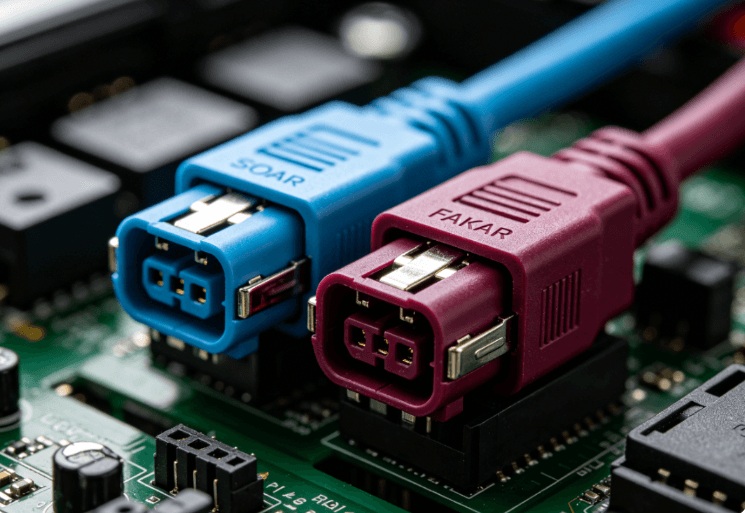
Technical Architecture of Specialized Automotive Interfaces
Different vehicle subsystems require specific mating logics. Based on industrial requirements, SOAR’s connector series focuses on three high-demand standards, each with distinct engineering features designed for specific data protocols.
1. FAKRA Connectors: RF Signal Integrity
For GPS, cellular, and satellite radio modules, signal loss is the primary enemy. FAKRA connectors utilize a specialized plastic housing with an integrated locking mechanism.
- Color-Coded Keying: As seen in the SOAR FAKRA range, the use of standardized colors (such as Water Blue or Bordeaux) prevents cross-mating errors during fast-paced assembly lines.
- 360° Shielding: These connectors provide a continuous metallic path to ground, essential for minimizing Electromagnetic Interference (EMI) in RF circuits operating up to 6 GHz.
2. OBDII (J1962) Connectors: Ergonomics and Customization
Standard diagnostic ports are often bulky, but custom iterations allow for better cabin integration.
- Low-Profile & Right-Angle Designs: SOAR provides right-angle OBDII housings that allow cables to exit parallel to the dashboard. This is a critical feature for fleet management devices that must remain plugged in without obstructing the driver.
- Housing Variability: The availability of white, black, and purple housings (visible in the SOAR connector collection) helps manufacturers differentiate between various CAN bus branches or proprietary diagnostic levels.
3. J1939/J1708: Heavy-Duty Performance
In the trucking and agricultural sectors, the environment is significantly more aggressive than in passenger vehicles.
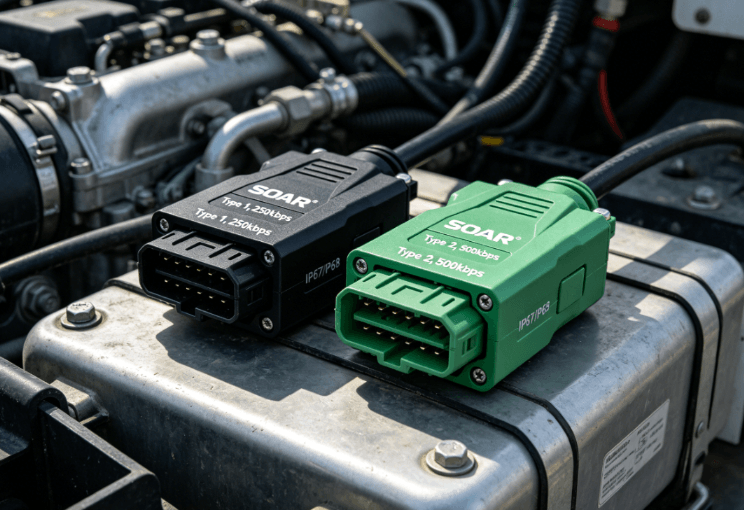
- Type 1 vs. Type 2: A key feature of SOAR’s J1939 9-pin connectors is the distinction between Black (Type 1, 250kbps) and Green (Type 2, 500kbps) housings.
- Mechanical Keying: The mechanical differences between these types ensure that high-speed diagnostic tools are not accidentally connected to lower-speed legacy networks, protecting the vehicle’s ECU from data collisions.
Material Science and Durability Standards
The "Features" of an automotive connector extend into its chemical composition. Since these parts are often exposed to engine heat and road contaminants, material selection is non-negotiable.
- PBT and PA66 Construction: Most housings utilize glass-filled Polybutylene Terephthalate (PBT) or Polyamide (PA66). these materials provide excellent dimensional stability and resistance to fuels, oils, and brake fluids.
- Contact Plating Logic: Depending on the signal type, contacts are typically plated with Nickel, Tin, or Gold. Gold plating is prioritized for low-voltage sensor signals to prevent the oxidation that causes intermittent "ghost" faults.
- Environmental Sealing: To achieve IP67 or IP68 ratings, specialized silicone seals are integrated into the connector design, ensuring that moisture cannot wicking into the terminals even during high-pressure washdowns.
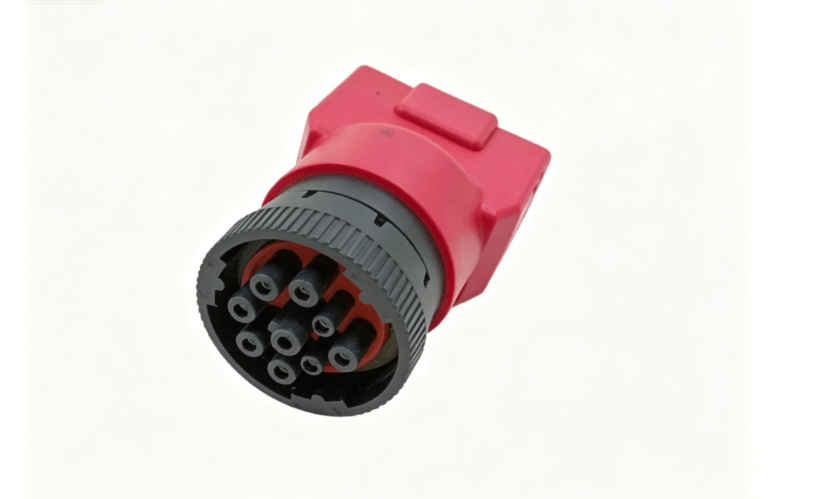
Feature Comparison: Automotive Connector Series
| Connector Type |
Primary Protocol |
Key Feature |
Common Industry Use |
| Fakra |
RF / Telematics |
Color-Coded Keying |
GPS, Antennas, ADAS |
| OBDII |
J1962 (Diagnostics) |
Right-Angle Form Factor |
Fleet Management, ELD |
| J1939 (9-Pin) |
CAN Bus |
Type 1 & 2 Differentiators |
Heavy-Duty Trucks, Agriculture |
| DB9 Adapters |
Serial Communication |
Ruggedized Overmolding |
Diagnostic Tool Interfacing |
Mechanical Security and Vibration Mitigation
Automotive environments involve constant vibration. A feature often overlooked by non-engineers is the "secondary lock" system. SOAR custom automotive electrical connectors typically incorporate:
- Terminal Position Assurance (TPA): A secondary locking clip that ensures the metal terminal is fully seated. If the terminal isn't in the right place, the TPA cannot be closed.
- Connector Position Assurance (CPA): A slide that prevents the primary latch from being accidentally depressed. This ensures that even under severe chassis vibration, the connection remains electrically continuous.
Application Logic: Choosing the Right Feature Set
When selecting from the SOAR connector catalog, engineers must match the connector feature to the "Zone" of the vehicle.
- Interior Zone: Focuses on right-angle OBDII designs and slim-profile housings for aesthetics and driver safety.
- Engine/Chassis Zone: Prioritizes J1939 standards with high-impact resistance and heavy-duty seals.
- Roof/Glass Zone: Uses FAKRA connectors for telematics, where RF shielding is the most critical feature.
FAQ
What is the difference between a Green and Black J1939 connector?
In the J1939 standard, Black connectors are "Type 1" and support communication speeds of 250kbps. Green connectors are "Type 2" and support 500kbps (and higher). They are keyed differently to prevent a technician from plugging a low-speed cable into a high-speed network.
Why use a right-angle OBDII connector instead of a straight one?
Right-angle connectors allow the cable to exit to the side, which is essential for "permanent" installations like ELD (Electronic Logging Devices) or GPS trackers. It prevents the device from being kicked or damaged by the driver.
How does FAKRA color-coding improve manufacturing?
FAKRA colors (like Water Blue for "Universal" or White for "GPS") act as a Poka-Yoke (error-proofing) mechanism. It ensures that factory workers can visually verify that the correct antenna is connected to the correct module without needing to inspect tiny pinouts.
Are these connectors compatible with standard diagnostic tools?
Yes. While the housings may be customized for specific OEM requirements (like color or cable exit angle), the pin interfaces follow international standards (J1962 for OBDII and ISO 20860 for FAKRA) to ensure compatibility with universal tools.
Reference Sources
- SAE J1939-13: Standard for Off-Board Diagnostic Connectors in heavy-duty vehicles. sae.org
- ISO 20860-1: Dimensions and electrical requirements for 50-ohm RF interfaces (FAKRA). iso.org
- USCAR-2: Performance Specification for Automotive Electrical Connector Systems. uscar.org
- IEC 60529: Degrees of protection provided by enclosures (IP Code). iec.ch


