Explore the essential industrial cable types used in modern manufacturing. This technical guide covers control, power, and robotic cables, plus material selection for harsh environments.
Selecting the correct cabling infrastructure is the backbone of any reliable manufacturing facility. In high-stakes industrial environments, a cable is more than a simple conductor; it is a precision-engineered component designed to withstand chemical exposure, extreme temperatures, and continuous mechanical stress. Failure to match a cable’s technical specifications to its operating environment often results in intermittent signal loss, EMI interference, or catastrophic equipment downtime.
Modern industrial ecosystems rely on a diverse array of cables to power heavy machinery, transmit sensitive sensor data, and coordinate complex robotic movements. Understanding the distinctions between these cable types is critical for engineers and project managers aiming to optimize system longevity and safety.
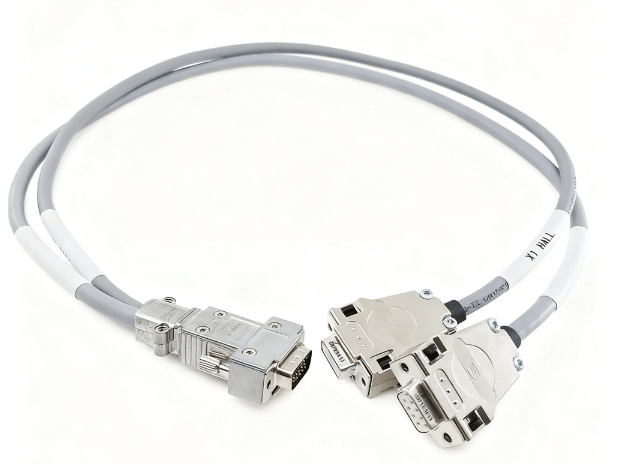
Primary Classifications of Industrial Cables by Function
Industrial cables are categorized primarily by the role they play within a manufacturing cell or production line. While a domestic cable focuses on basic conductivity, industrial variants prioritize durability and signal integrity.
- Control Cables: These are used to send signals that regulate the operation of automated equipment. They typically carry low-voltage signals and are found in assembly lines, conveyor systems, and robotic arms.
- Power Cables: Responsible for distributing high-voltage electricity to motors and heavy machinery. These cables must handle significant thermal loads and are often specialized for Variable Frequency Drive (VFD) applications.
- Data and Communication Cables: These facilitate the exchange of information between PLCs (Programmable Logic Controllers), sensors, and HMI (Human-Machine Interface) panels. Common types include Industrial Ethernet (Cat5e/Cat6), Profibus, and CAN bus.
- Instrumentation Cables: Used in processing plants (like chemical or oil and gas) to transmit signals from transducers and monitors to a central control room.
Material Science: The Difference Between Success and Failure
The longevity of an industrial cable depends largely on its outer jacket and insulation materials. In manufacturing, cables are often exposed to "industrial fluids," such as cooling oils, lubricants, and cleaning agents, which can degrade standard plastics within weeks.
| Material Type |
Pros |
Best Use Case |
| PVC (Polyvinyl Chloride) |
Cost-effective, flame retardant, resistant to many chemicals. |
General-purpose control systems, static installations. |
| PUR (Polyurethane) |
Exceptional abrasion resistance, highly flexible, oil and halogen-free. |
Drag chains, robotic arms, outdoor or cold environments. |
| TPE (Thermoplastic Elastomer) |
Extreme flexibility, survives millions of flex cycles, UV resistant. |
High-speed automated machinery, heavy-duty outdoor use. |
| LSZH (Low Smoke Zero Halogen) |
Does not emit toxic fumes when burned. |
Enclosed spaces, tunnels, or areas with high human density. |
When reviewing technical specifications, engineers must prioritize the jacket material based on the specific "environmental stressors" present on the factory floor. For instance, a PVC cable might crack in a sub-zero cold storage facility, whereas a PUR cable would remain pliable and functional.
The Mechanics of Motion: Static vs. Continuous Flex Cables
In industrial automation, how a cable moves is just as important as what it carries. Standard cables are designed for "static" applications—where they are installed once and remain stationary. However, in modern manufacturing, cables are frequently integrated into moving parts.
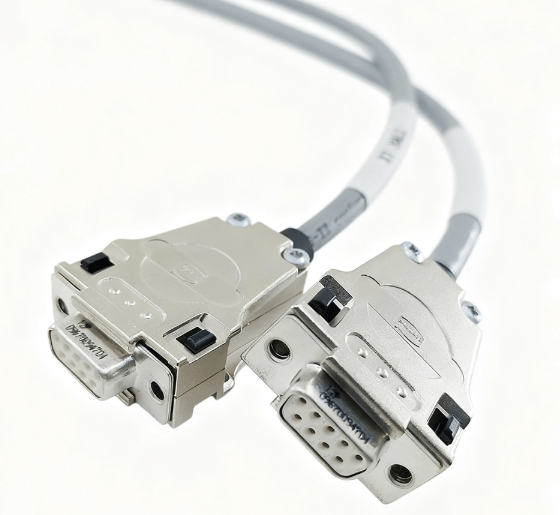
Drag Chain and Robotic Cables
Continuous flex cables (also known as chain-fitted cables) are engineered for millions of bending cycles. They utilize fine-stranded conductors and specialized braiding techniques to prevent the "corkscrew" effect—a common failure where the internal conductors twist and eventually snap.
For robotic applications, cables must withstand "torsional stress," where the cable is twisted along its longitudinal axis. This requires a different construction than a standard drag chain cable, which only bends in one plane. Technical experts often look for a "minimum bend radius" (e.g., 7.5 x d) to ensure the cable can operate within the physical constraints of the machine without fatigue.
Shielding and Interference Management (EMI/RFI)
Manufacturing floors are noisy environments—not just acoustically, but electromagnetically. Large motors, welding equipment, and VFDs generate significant Electromagnetic Interference (EMI). Without proper shielding, this interference can corrupt data signals or cause "ghost" triggers in control systems.
- Foil Shielding: Uses a thin layer of aluminum. It provides 100% coverage but is fragile and best suited for static applications.
- Braid Shielding: A woven mesh of copper wires. While it provides 70% to 95% coverage, it offers much higher structural integrity and lower DC resistance, making it ideal for flexible applications.
- Combination Shielding: High-performance cables often use both foil and braid to provide maximum protection across both high and low frequencies.
For Variable Frequency Drive (VFD) applications, specialized shielding is mandatory to contain the high-frequency noise generated by the drive, preventing it from disrupting nearby sensitive electronics.
Understanding Technical Standards and Compliance
Compliance is not just a legal requirement; it is a benchmark of quality. In a globalized manufacturing sector, cables must often meet multiple international standards to ensure safety and interoperability.
- UL (Underwriters Laboratories): Essential for the North American market, focusing on fire safety and electrical integrity.
- CE (Conformité Européenne): Mandatory for products sold within the European Economic Area.
- VDE (Verband der Elektrotechnik): A German standard that is highly respected globally for electrical engineering and safety.
- RoHS/REACH: Environmental standards ensuring the cable does not contain hazardous substances like lead or mercury.
When sourcing components for OEM projects, verifying these certifications ensures that the equipment can be exported and operated legally across different jurisdictions without needing expensive rewiring.
Critical Selection Factors for Engineers
Choosing the right industrial cable requires a holistic view of the machine's lifecycle. A common mistake is selecting a cable based solely on electrical capacity while ignoring the physical environment.
Project managers should ask:
- What is the ambient temperature? High heat requires silicone or specialized Cross-linked Polyethylene (XLPE).
- Is there constant motion? If so, what is the required flex life (e.g., 5 million vs. 20 million cycles)?
- What chemicals are present? Resistance to cutting oils or hydraulic fluids is non-negotiable in CNC machining environments.
- What is the "bend radius" constraint? Compact machines require cables with high flexibility and small diameters.
By addressing these technical nuances during the design phase, manufacturers can significantly reduce the "Total Cost of Ownership" (TCO) by avoiding the high costs of unplanned maintenance and replacement.
FAQ
What is the difference between a control cable and a power cable?
Control cables carry low-voltage signals (usually 300V-500V) to command equipment, while power cables carry high-voltage electricity (600V to several kV) to drive motors and heavy machinery. Power cables have thicker conductors to handle higher current loads.
Why do I need a specific VFD cable instead of a standard power cable?
Standard cables can leak "common-mode" current, which damages motor bearings and creates significant EMI. VFD cables feature specialized insulation (like XLPE) and robust shielding to contain this noise and withstand the voltage spikes common in drive systems.
What does "Minimum Bend Radius" mean?
This is the smallest radius a cable can be bent without damaging the internal conductors or insulation. It is usually expressed as a multiple of the cable's outer diameter (e.g., 10x OD). Exceeding this limit leads to rapid cable failure.
Can I use PVC cables in outdoor manufacturing environments?
Standard PVC can become brittle when exposed to UV radiation and freezing temperatures. For outdoor use, it is better to use TPE or specialized "UV-stabilized" PVC jackets to prevent cracking and moisture ingress.
What is a "torsion-rated" cable?
Unlike standard flexible cables that bend back and forth, torsion-rated cables are designed to handle twisting motions, common in 6-axis robotic arms. They feature different internal construction to prevent the copper strands from knotting or breaking during rotation.
Reference Sources
- UL (Underwriters Laboratories): ul.com - Standards for safety and electrical component testing.
- IEEE (Institute of Electrical and Electronics Engineers): ieee.org - Technical papers on EMI shielding and industrial signal integrity.
- IEC (International Electrotechnical Commission): iec.ch - International standards for electrotechnology in manufacturing.
- NEMA (National Electrical Manufacturers Association): nema.org - Guidance on enclosures and cabling for industrial environments.


