Categoría

Selecting an Automotive Cable Assembly Supplier for OEM Needs

Evaluate automotive cable assembly suppliers for OEM projects. Learn about IATF 16949 standards, material selection for EVs, and how to optimize your RFQ process.
Aug 13th,2026 16 Puntos de vista
Catálogo

The modern vehicle architecture has evolved from a simple mechanical machine into a complex, software-defined ecosystem. At the heart of this transformation is the wiring harness—the "nervous system" that facilitates power distribution and high-speed data transmission. For Original Equipment Manufacturers (OEMs) and Tier 1 suppliers, identifying a competent automotive cable assembly supplier is no longer just about finding a manufacturer; it is about securing a technical partner capable of navigating rigorous safety standards and harsh environmental demands.

Reliability in automotive wiring is non-negotiable. A single failure in a sensor lead or a high-voltage battery cable can lead to catastrophic system shutdowns or expensive vehicle recalls. Consequently, procurement teams must look beyond unit price to evaluate engineering depth, material science expertise, and compliance with global automotive benchmarks.
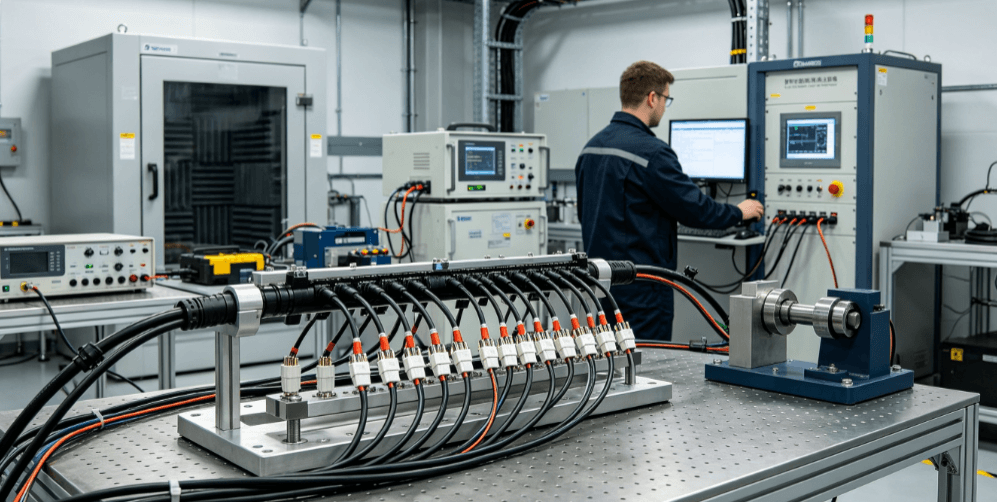
automotive cable assembly supplier-1

Core Quality Standards: The IATF 16949 Benchmark

In the automotive sector, the baseline for any reputable supplier is the IATF 16949:2016 certification. This standard goes beyond ISO 9001 by emphasizing defect prevention, reduction of variation, and waste management in the supply chain.

A qualified automotive cable assembly supplier must demonstrate mastery over the Advanced Product Quality Planning (APQP) process. This includes providing a detailed Production Part Approval Process (PPAP) submission for every new component. These documents ensure that the manufacturing process has the potential to produce products consistently meeting all requirements during actual production runs at the quoted rate.

Beyond IATF, suppliers often adhere to specific regional or technical standards:

  • SAE J1128: For low-voltage primary cable requirements.
  • ISO 6722-1: Specifying dimensions and test methods for 60V and 600V road vehicle cables.
  • UL 758: For Appliance Wiring Material (AWM) often found in cabin electronics.


Material Science in Harsh Automotive Environments

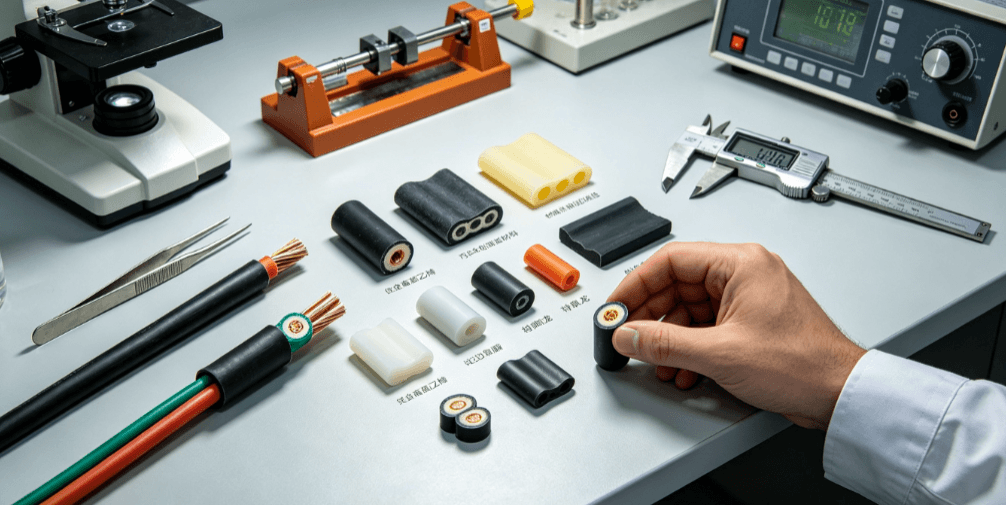
Automotive environments are brutal. Cable assemblies must withstand extreme temperature fluctuations, vibration, and exposure to corrosive fluids like engine oil, coolant, and brake fluid. Selecting the right insulation and jacket material is a critical engineering decision.

Material Type Temperature Range Key Characteristics Common Application
PVC (Cross-linked) -40°C to +125°C Flame retardant, cost-effective General chassis wiring
PUR (Polyurethane) -50°C to +90°C High abrasion & tear resistance External sensors, ABS systems
Silicone -50°C to +200°C Extreme flexibility, heat resistant High-voltage EV powertrains
Teflon (ETFE/FEP) -65°C to +200°C Chemical inertness, thin wall Engine compartment sensors


For electric vehicle (EV) applications, the requirements shift toward high-voltage (HV) safety. HV cables are typically color-coded orange and require specialized shielding to mitigate Electromagnetic Interference (EMI), which can disrupt sensitive ADAS (Advanced Driver Assistance Systems) signals.


Key Factors in Evaluating an OEM Cable Supplier

When auditing a potential partner like Soar Cable, project managers should focus on three pillars: Design for Manufacturing (DFM), vertical integration, and testing capabilities.
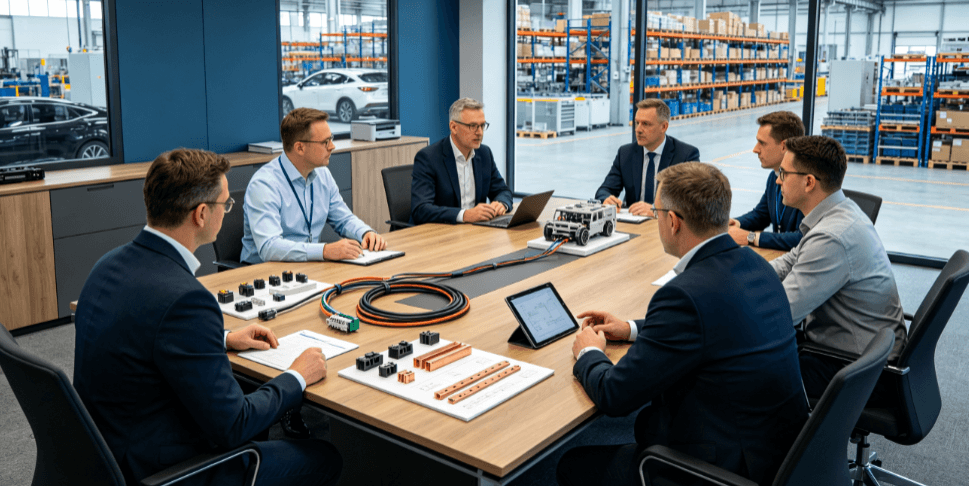
1. Engineering and DFM Support
A top-tier supplier does not just "build to print." They should offer DFM feedback during the prototyping phase. This includes suggesting alternative terminal platings to prevent galvanic corrosion or recommending specific overmolding techniques to achieve IP67 or IP68 waterproof ratings for exterior connectors.

2. Manufacturing Scalability
OEM projects often start with small pilot runs and scale to hundreds of thousands of units. Ensure the supplier utilizes automated wire processing machines (like Komax or Schleuniger) for cutting, stripping, and crimping. Automation reduces human error and ensures crimp force monitoring is applied to every single terminal.

3. Comprehensive Testing Protocols
Validation is where the best suppliers differentiate themselves. Look for in-house testing labs capable of performing:

  • Continuity and Hipot Testing: To ensure no short circuits or insulation breakdowns.
  • Pull-Force Testing: To validate the mechanical integrity of the crimp.
  • Environmental Stress Screening (ESS): Thermal cycling and salt spray testing.
  • Signal Integrity Analysis: Crucial for LVDS or Ethernet cables used in infotainment and cameras.
 

automotive cable assembly supplier-2


Navigating the RFQ and Procurement Workflow

For OEM procurement, the Request for Quotation (RFQ) phase is the foundation of the project timeline. To receive an accurate quote, your documentation should include:

  • Detailed 2D/3D Drawings: Including tolerances and branch lengths.
  • Bill of Materials (BOM): Specifying preferred brands for connectors (e.g., TE Connectivity, Molex, Yazaki).
  • Estimated Annual Usage (EAU): To determine tooling amortization and volume pricing.
  • Testing Requirements: Any specific validation cycles required by your end-customer.

Leading suppliers like Soar Cable emphasize transparent communication regarding lead times. In the current global supply chain climate, raw material lead times (especially for specialized resins and copper) can fluctuate. A partner who provides proactive inventory management or "safety stock" programs is invaluable for maintaining production uptime.
automotive cable assembly supplier-3


Conclusion: More Than Just Wires

The choice of an automotive cable assembly supplier directly impacts the safety and longevity of the vehicle. By prioritizing IATF 16949 compliance, material expertise, and automated production capabilities, OEM manufacturers can mitigate risks and ensure their electrical architectures perform flawlessly under the most demanding conditions. As vehicles move toward higher levels of autonomy and electrification, the demand for precision-engineered cable assemblies will only continue to rise, making the supplier selection process a strategic cornerstone of automotive engineering.


FAQ: OEM Automotive Cable Procurement

What is the typical MOQ for custom automotive cable assemblies?

For OEM-level production, Minimum Order Quantities (MOQs) typically range from 500 to 1,000 units per batch, depending on the complexity and specialized tooling required. However, many suppliers offer smaller runs for the prototyping and validation phases (PPAP).

How long is the lead time for a new automotive harness project?

Prototyping usually takes 2–4 weeks. Mass production lead times generally range from 6–10 weeks, depending on the availability of long-lead-time components like specialized automotive connectors.

Can you provide IATF 16949 and PPAP documentation?

Yes. Any supplier qualified for automotive OEM work must provide Level 3 PPAP documentation, which includes Process FMEA, Control Plans, and dimensional results as standard practice.

Do you support custom overmolding for waterproof applications?

High-quality suppliers utilize vertical injection molding machines to create custom overmolded strain reliefs and connectors. This is essential for sensors and exterior lighting that require IP67 or IP69K protection.

What measures are taken to ensure EMI/EMC compliance?

For data-sensitive or high-voltage lines, suppliers use tinned copper braiding, aluminum foil shielding, or twisted-pair configurations to minimize crosstalk and electromagnetic interference, ensuring compliance with automotive EMC standards.


Reference Sources

  • IATF 16949:2016 - Quality management system standard for the automotive industry. iatfglobaloversight.org
  • SAE International - Standard J1128 for Low Voltage Primary Cable. sae.org
  • ISO 6722-1 - Road vehicles — 60 V and 600 V single-core cables. iso.org
  • IPC/WHMA-A-620 - Requirements and Acceptance for Cable and Wire Harness Assemblies. ipc.org
Dejar un mensaje
Nombre de pila *
Apellido *
País *
Correo electrónico *
Mensaje *
Message Us