Explore key factors in selecting medical device cable connectors, including interface compatibility, electrical performance, locking mechanisms, sealing and cleaning requirements. This guide helps engineers compare connector options for reliable medical equipment connections.
Medical device cable connectors establish the electrical and mechanical connection between medical equipment, sensors, and accessories. Choosing the right connector requires more than matching its shape or pin count. Contact configuration, electrical performance, locking mechanisms, sealing, and cleaning compatibility all influence its suitability.
For equipment manufacturers, connector selection should begin with the intended device interface and operating conditions. A connector used inside a diagnostic system may have different requirements from one frequently handled on a portable monitoring device.
What Types of Connectors Are Used in Medical Devices?
Medical equipment may use circular, rectangular, coaxial, board-to-cable, or proprietary connectors. Each type has different mechanical and electrical characteristics.
| Connector type |
Typical application |
Main consideration |
| Circular connectors |
Equipment interfaces and detachable accessories |
Locking, orientation, and available space |
| Rectangular multi-pin connectors |
Multi-signal connections and equipment modules |
Contact density and pin assignment |
| Coaxial connectors |
RF and selected signal connections |
Impedance and shielding continuity |
| Board-to-cable connectors |
Internal equipment wiring |
Compact size and secure termination |
| Proprietary connectors |
Device-specific sensors and accessories |
Exact equipment compatibility |
Connector type alone does not establish medical suitability. The selected model must meet the equipment manufacturer's electrical, mechanical, and environmental requirements.
How Do Pinout and Electrical Ratings Affect Compatibility?
A connector may physically mate with the equipment while providing an incorrect electrical connection. Pin assignment, contact arrangement, and signal characteristics must match the approved device documentation.
Begin with the connector manufacturer's part number and controlled interface drawing.
Confirm:
-
Contact count, gender, and pin numbering.
-
Connector keying and mating orientation.
-
Rated voltage and current.
-
Contact and insulation resistance.
-
Shielding and grounding arrangements.
-
Required cable termination method.
Pin numbering requires particular attention. A connector viewed from the mating face may appear mirrored when viewed from the termination side.
Include the viewing direction and a pin-to-wire schedule in the drawing. This helps prevent wiring errors during assembly and inspection.
For low-level sensor signals, contact stability and electromagnetic interference may affect measurement quality. High-speed connections may also require controlled impedance, suitable shielding, and verified transmission characteristics.
Electrical ratings should be assessed within the finished cable assembly. The connector's published rating does not override limitations introduced by conductor size, termination, or operating temperature.
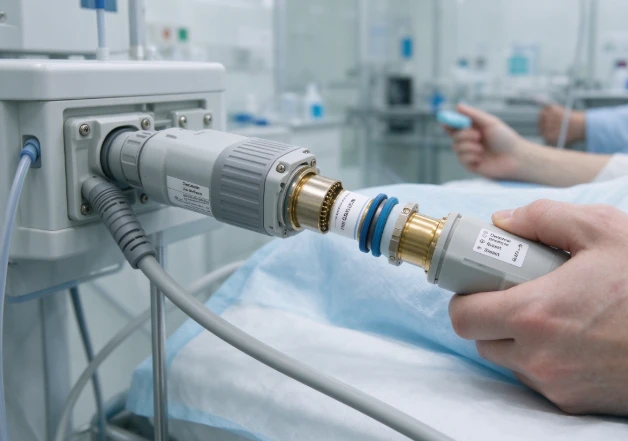
Mechanical Design, Sealing and Cleaning Requirements
Medical connectors may experience repeated mating, pulling, bending, and cleaning. Their mechanical design should reflect how the equipment is handled.
A portable monitor, for example, may require a compact connector with secure retention and an accessible release mechanism. An internally mounted connector may place greater emphasis on installation clearance and service access.
Important mechanical factors include:
-
Locking or coupling mechanism.
-
Mating-cycle rating.
-
Connector retention and contact durability.
-
Cable exit direction and strain relief.
-
Housing dimensions and available clearance.
Sealing should be evaluated as part of the complete connection. An IP-rated connector does not automatically provide the same protection after custom cable termination or overmolding.
The IEC 60529 IP Code standard provides a framework for classifying protection against solid objects and water ingress.
Where sealing is required, confirm the rating for the relevant mated configuration and cable transition.
Cleaning compatibility is equally important for reusable equipment. Housing materials, seals, plating, and overmolds should tolerate the specified disinfectants and cleaning procedures.
If a connector or cable assembly contacts the patient, the device manufacturer should assess biological safety according to the applicable contact conditions. ISO 10993-1:2025 provides a risk-based framework for biological evaluation.
Neither standard automatically certifies an individual connector for every medical application.
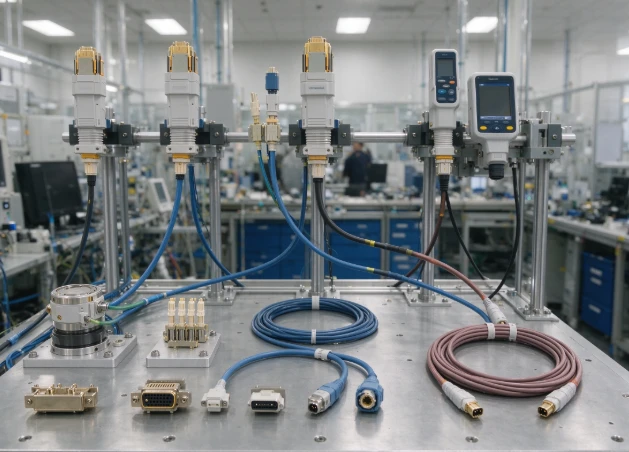
How to Compare Medical Cable Connector Options
Connector selection involves several trade-offs. A smaller connector may save space but offer limited grip area or cable exit clearance. A more robust locking design may require additional installation space.
The following comparison helps organize an engineering review:
| Selection factor |
What to check |
| Interface |
Mating part, keying, contact count, and pinout |
| Electrical |
Voltage, current, resistance, and signal requirements |
| Mechanical |
Locking, retention, mating cycles, and dimensions |
| Environment |
Temperature, moisture, chemicals, and cleaning |
| Cable integration |
Termination, shielding, overmolding, and strain relief |
| Component control |
Approved source, lifecycle status, and revision tracking |
When considering an alternative connector, verify mechanical interchangeability and electrical equivalence separately.
Similar appearance or matching contact count does not guarantee equivalent performance.
For prototype evaluation, the connector should be assembled with the intended cable and tested using the actual equipment interface or an approved test fixture.
Why Does Connector Selection Affect the Complete Cable Assembly?
The connector, cable, termination, and strain relief operate as one assembly. Even a suitable connector may perform poorly when paired with an unsuitable cable or termination design.
A stiff cable can concentrate bending stress near the connector exit. Incorrect shield termination may affect signal performance, while poorly controlled crimping or soldering can introduce connection defects.
An overmold may help protect the cable transition, but its material and geometry require evaluation. SOAR's medical cable overmolding guide discusses these design considerations in more detail.
Assembly verification may include pin mapping, continuity, contact inspection, retention testing, and application-specific checks.
The required tests should follow the equipment specification and risk assessment rather than a generic connector checklist.
SOAR Cable and Connector Product References
SOAR's Medical Cables collection provides an overview of cable products intended for medical equipment applications.
Its Electronic Wire Harness collection also includes different connector configurations.
Two examples illustrate the range of interface arrangements:
These products are general connector assembly references, not confirmed medical-device-qualified components. Their use in medical equipment would require separate evaluation against the intended device requirements.
For a custom medical cable project, connector drawings, pin assignments, electrical ratings, materials, and acceptance criteria should be reviewed before selecting the final assembly configuration.
FAQ
Can connectors with the same number of pins be interchangeable?
Not necessarily. Keying, contact geometry, pin assignment, electrical ratings, and locking mechanisms may differ. Both mechanical and electrical compatibility must be verified.
Does an IP-rated connector guarantee a waterproof medical cable assembly?
No. The complete mated interface, cable termination, and sealing structure must meet the specified ingress protection requirements.
Should connector pinouts be shown from the mating side?
The drawing should clearly identify its viewing direction. A mating-face view is useful, but the corresponding cable-side wiring map must remain unambiguous.
What matters most for connectors used on reusable medical equipment?
Mating durability, cleaning compatibility, contact reliability, strain relief, and intended operating conditions are important considerations.
Reference Sources
-
IEC – IEC 60529: Degrees of Protection Provided by Enclosures
-
ISO – ISO 10993-1:2025, Biological Evaluation of Medical Devices
-
FDA – Quality and Compliance: Medical Devices
-
IEC – IEC 60601-1, Medical Electrical Equipment